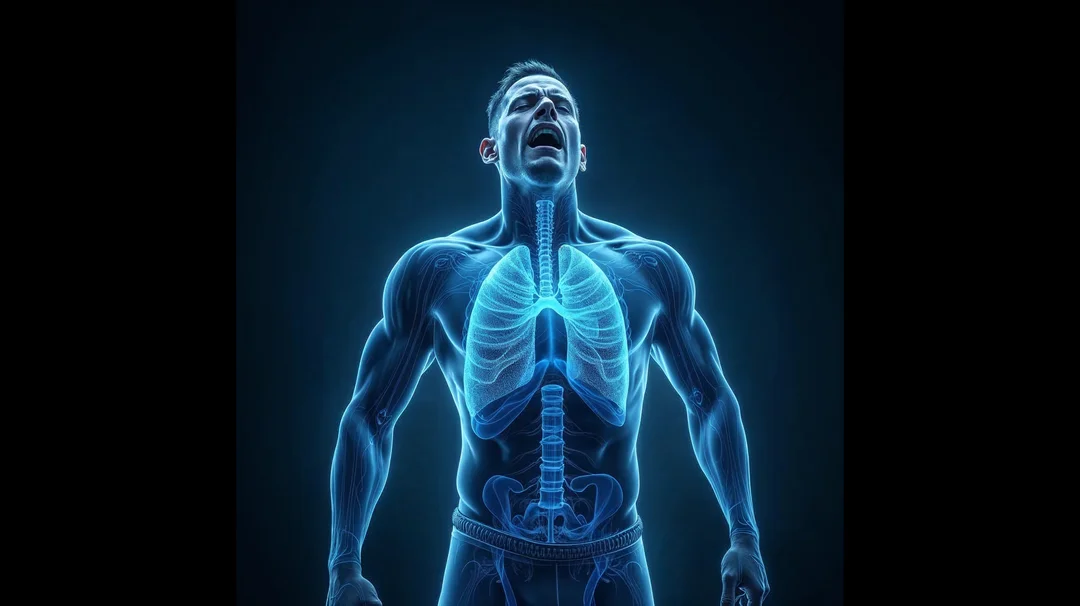
„Napnij core!” — trenerzy powtarzają to przed każdym sprintem, pojedynkiem, strzałem. Sztywność tułowia to dogmat przygotowania motorycznego w piłce nożnej: sztywny tors ma chronić kręgosłup i efektywnie przenosić siłę. Co jednak, jeśli ta obsesja na punkcie ciągłego napięcia jest główną przyczyną, dla której Twoi zawodnicy „padają” w 70. minucie?
Przepona odpowiada za 70–80% pracy oddechowej w spoczynku (Roussos & Macklem, 1982). Każde mechaniczne ograniczenie jej zstępowania bezpośrednio zmniejsza objętość oddechową — ilość powietrza przenoszonego w jednym oddechu — i uruchamia kaskadę kompensacyjnych wzorców przyspieszających zmęczenie.
Konflikt core–przepona: dlaczego sztywność kosztuje tlen
Chronicznie napięte mięśnie brzucha — zwłaszcza mięśnie skośne i powierzchowny mięsień prosty brzucha — działają jak sztywny gorset wokół tułowia. Tworzy to podwyższone ciśnienie wewnątrzbrzuszne (IAP) w spoczynku, nie pozostawiając przestrzeni na zstąpienie przepony podczas wdechu.
Oto jak ten konflikt rozgrywa się w czterech odrębnych mechanizmach:
| Mechanizm | Przyczyna źródłowa | Efekt na boisku |
|---|---|---|
| Zablokowana przepona | Wysokie spoczynkowe napięcie brzucha blokuje przemieszczenie w dół | Zmniejszona objętość oddechowa, wczesna duszność |
| Oddychanie szyją | Mięśnie pomocnicze kompensują zablokowaną przeponę | Płytki oddech, sztywność szyi/barków, ograniczony ruch głowy |
| Piętrzenie oddechów | Niepełny wydech uwięzia powietrze w płucach (hiperinflacja) | Paniczna duszność mimo pełnych płuc |
| Konflikt stabilizacja vs. oddychanie | Przepona + TVA wybierają stabilizację kosztem oddychania | Dostarczanie tlenu spada w szczycie zapotrzebowania sprintowego |
Mechanizm 1 — Zablokowana przepona: zasada zamkniętego słoika
Zstąpienie przepony wymaga elastycznej ściany brzucha. Podczas prawidłowego wdechu przepona kurczy się i przesuwa w dół, wypierając narządy jamy brzusznej i zwiększając objętość płuc. Aby to nastąpiło, ściana brzucha musi ustąpić — delikatnie się rozciągając, by pomieścić przesunięcie trzewi.
Gdy zawodnik utrzymuje chroniczne wysokie spoczynkowe napięcie core (czy to z dobrze wytrenowanego „sześciopaku”, czy z odruchowego nawyku wciągania brzucha), przepona uderza w ścianę podwyższonego ciśnienia wewnątrzbrzusznego. Nie może swobodnie opaść. Rezultat: objętość oddechowa maleje dokładnie w momencie szczytowego zapotrzebowania na tlen — podczas sprintu lub akcji pressingu.
Mechanizm 2 — Oddychanie mięśniami pomocniczymi: wzorzec kompensacji szyjnej
Pomocnicze mięśnie oddechowe — mięśnie pochyłe szyi (scaleni), czworoboczny i mostkowo-obojczykowo-sutkowy — aktywują się, gdy przepona jest mechanicznie ograniczona. Układ nerwowy zawsze znajdzie drogę do tlenu; gdy główna trasa jest zablokowana, rekrutuje mięśnie nigdy nieprojektowane do ciągłego obciążenia oddechowego.
Oddychanie mięśniami pomocniczymi zwiększa koszt tlenowy samego oddychania o 30–40% w porównaniu z oddychaniem przeponowym (Harms et al., 1998). W praktyce: zawodnik wydaje znaczną część budżetu VO₂ na sam transport powietrza — nie na zasilanie mięśni. Efekty wtórne to chroniczne napięcie szyi, zmniejszony zakres ruchu odcinka szyjnego i sztywność obręczy barkowej ograniczająca swobodę w pojedynkach powietrznych.
Mechanizm 3 — Piętrzenie oddechów: duszenie się z pełnymi płucami
Piętrzenie oddechów (dynamiczna hiperinflacja) następuje, gdy faza wydechu jest niekompletna — powietrze kumuluje się w płucach w kolejnych cyklach oddechowych. Nadmiernie napięty brzuch uniemożliwia przeponie pełny powrót do spoczynkowego kształtu kopuły po każdym wydechu.
Konsekwencja fizjologiczna: czynnościowa pojemność zalegająca (FRC) wzrasta, klatka piersiowa blokuje się w stanie częściowego wdechu, a zapasowa objętość wdechowa kurczy się. Zawodnik desperacko łapie powietrze, podczas gdy jego płuca są fizycznie niemal pełne. To jedna z najczęstszych przyczyn paniki na boisku — i jest całkowicie mechaniczna, nie aerobowa.
Mechanizm 4 — Kompromis stabilizacja vs. oddychanie w TVA i przeponie
Mięsień poprzeczny brzucha (TVA) i przepona dzielą podwójną rolę: stabilizacja kręgosłupa i oddychanie. W normalnych warunkach cyklicznie przełączają się między tymi funkcjami automatycznie. W warunkach chronicznego napędu nerwowego ku sztywności — wywołanego lękiem przedmeczowym, kompensacją bólu pleców lub latami treningu „napinaj wszystko” — układ nerwowy faworyzuje obie mięśnie ku stabilizacji kosztem oddychania.
Badania nad integracją posturalno-oddechową przepony (Hodges et al., 2001) potwierdzają, że gdy zapotrzebowanie posturalne jest wysokie, amplituda oddechowa przepony maleje. W momentach najwyższej intensywności meczu — gdy testowana jest tolerancja CO₂ a zapotrzebowanie na tlen jest krytyczne — układ oddechowy jest jednocześnie zarekwirowany do utrzymania postawy.
Oddychanie przeponowe vs. oddychanie pomocnicze: kluczowe różnice dla sportowców
| Parametr | Oddychanie przeponowe | Oddychanie pomocnicze / torsowe |
|---|---|---|
| Objętość oddechowa (na oddech) | ~500–600 ml w spoczynku | ~300–400 ml (ograniczona) |
| Koszt O₂ oddychania | ~1–2% całkowitego VO₂ | Do 10–15% całkowitego VO₂ przy wysokiej intensywności |
| Wpływ na HRV | Promuje tonus przywspółczulny, szybsza regeneracja | Utrzymuje aktywację współczulną, wolniejsza regeneracja |
| Napięcie szyi i barków | Niskie | Wysokie (chroniczne przeciążenie scaleni/trapeziusa) |
| Stabilizacja kręgosłupa | TVA + przepona dzielą obciążenie efektywnie | TVA monopolizuje rolę; oddychanie cierpi |
Rozwiązanie: siła elastyczna, nie tylko sztywna sztywność
Trening core w piłce nożnej musi rozwijać dwie przeciwstawne jakości jednocześnie: zdolność do wygenerowania maksymalnego ciśnienia wewnątrzbrzusznego w ułamku sekundy podczas pojedynku bark w bark, oraz zdolność do pełnego zwolnienia tego napięcia między akcjami, by umożliwić pełną ekskursję przeponową.
Core, który potrafi tylko napinać — a nigdy zwalniać — to core, który trenuje zawodnika do szybszego zmęczenia.
Praktyczne cele treningu core zintegrowanego z oddychaniem:
- Ćwiczenia izolacji przepony — oddychanie 360° przywracające naturalną elastyczność ściany brzucha i obniżające spoczynkowe ciśnienie wewnątrzbrzuszne
- Trening tolerancji CO₂ — protokoły zatrzymań oddechu podczas ruchu o niskiej intensywności, podnoszące tolerowany próg CO₂ zanim potrzeba wdechu przełamie technikę
- Integracja oddechowo-stabilizacyjna — ćwiczenia core wymagające pełnego wydechu, uczące TVA i przeponę współpracy zamiast rywalizacji
- Kontrola proporcji wdech/wydech podczas biegów — wydłużenie fazy wydechowej zapobiega piętrzeniu oddechów i utrzymuje FRC na poziomie bazowym
Najczęściej zadawane pytania
Czy trening core zawsze upośledza mechanikę oddechową?
Nie. Problem nie leży w sile core jako takiej — lecz w chronicznym spoczynkowym napięciu i braku ruchu zintegrowanego z oddychaniem. Dobrze zaprogramowany blok core uczy zarówno napinania, jak i zwalniania, pozostawiając mechanikę oddechową nietkniętą.
Jak szybko można odwrócić ograniczenie przepony?
Przy celowym reedukacji oddechowej mierzalne poprawy mechaniki oddechowej — w tym zwiększona objętość oddechowa i zmniejszona aktywność mięśni oddechowych pomocniczych — obserwuje się zazwyczaj w ciągu 4–6 tygodni konsekwentnej praktyki (McKeown, 2021).
Którzy zawodnicy są najbardziej zagrożeni?
Zawodnicy, którzy: (1) nawykowo wciągają brzuch, (2) mają historię bólu dolnej części pleców wywołującego kompensacyjne napinanie core, (3) doświadczają wysokiego lęku przedmeczowego, lub (4) realizują programy treningowe z dużą objętością izolowanej pracy brzucha i małą objętością reedukacji oddechowej.
Podsumowanie: co trenerzy i sztab S&C powinni wiedzieć
Efekt duszenia przepony to nie problem wydolnościowy — to problem mechaniczny. Zawodnik, którego core nie potrafi się zwolnić między akcjami, rozwinie piętrzenie oddechów, dominację mięśni pomocniczych i narastający dyskomfort hiperkapniczny niezależnie od wyniku VO₂max. Rozwiązaniem nie jest mniej treningu core. To mądrzejszy trening core, budujący siłę elastyczną — silny gdy trzeba, w pełni zwolniony gdy oddychanie tego wymaga.
Chcesz dowiedzieć się, jak odblokować przeponę i zoptymalizować mechanikę oddechową zawodników bez utraty stabilizacji tułowia? Skontaktuj się z AirFlow Performance →